- Elevator Electric Components
- Elevator Traction Machine
- Elevator Control System
- MONARCH Control Cabinet
- MONARCH Inverter
- MONARCH Car Top Inspection Box
- MONARCH Pit Inspection Box
- STEP Control Cabinet
- STEP Inverter
- STEP Car Top Inspection Box
- STEP Pit Inspection Box
- YASKAWA Control Cabinet
- YASKAWA Inverter
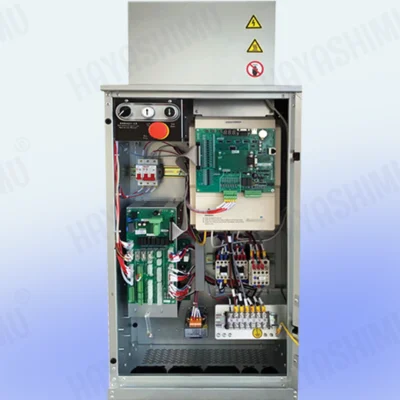
- HAYASHIMU Control Cabinet
- HAYASHIMU Inverter
- HAYASHIMU Car Top Inspection Box
- HAYASHIMU Pit Inspection Box
- Elevator Door System
- Elevator Guide Rail & Balance System
- Elevator Safety Components
- Other Elevator Parts
- Escalator Spare Parts

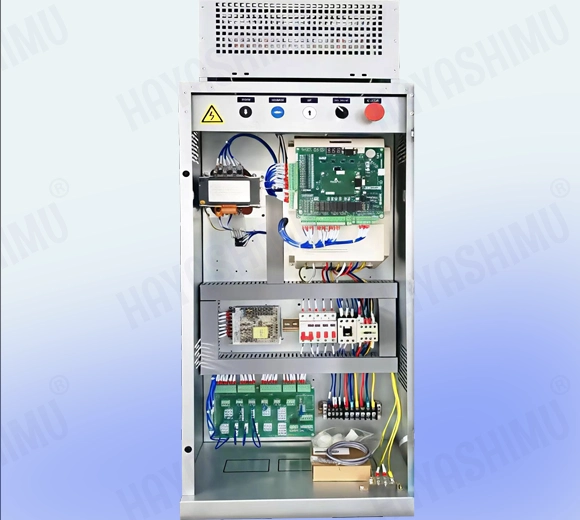
Monarch Nice 3000+ Control Cabinet | Nice 3000+ v2 Control Cabinet
Specifications:
| Feature | Details |
|---|---|
| Power Range | 2.2 kW to 160 kW |
| Motor Compatibility | Asynchronous (Induction) and Synchronous Permanent Magnet Motors |
| Control Technology | Closed-loop vector control with speed accuracy of ±0.05% |
| Voltage Options | 220V single-phase / 380V three-phase |
| Safety Standards | GB7588.1, EN 81-20/50 |
Description
Description
Monarch Nice 3000+ Control Cabinet | Nice 3000+ V2 Control Cabinet
Monarch Nice 3000+ V2 Control Cabinet prioritizes passenger safety while transporting people in elevators and lifts across all building types:
-
57+ Safety Protections (per GB7588.1/EN 81-20 standards):
- Overcurrent/overvoltage/undervoltage protection
- Door lock short detection + door bypass function
- UCMP (Unintended Car Movement Protection) compliant
- Leakage protectors on all power circuits
-
Fire Emergency Mode:
- Automatically returns elevator to pre-set fire floor
- Opens doors to evacuate passengers safely
- Disables all calls until reset → prevents trapped passengers
-
Power Failure Rescue:
- 48VDC or 220VAC backup power input options
- Safely moves elevator to nearest floor and opens doors
- Critical for high rise buildings and residential buildings with elderly residents
Energy Efficiency & Cost Savings
Monarch Nice 3000+ V2 Control Cabinet delivers 30% lower energy consumption than conventional elevator control systems, with intelligent features that reduce operational costs:
-
Vector Control Technology:
- Closed-loop vector control minimizes energy loss during motor operation
- Smooth acceleration/deceleration → reduces wear on elevator components, extends lifespan
-
Idle Power Optimization:
- Automatically cuts power to non-essential elevator components (lights, fans) after 30 seconds of inactivity
- Reduces standby energy use by 50% → significant savings for 24/7 commercial buildings
-
Regenerative Braking (V2 exclusive):
- Captures energy during descent → feeds back to building grid
- Additional 15% energy savings for high-traffic elevators in commercial buildings